Legal Guide 2026 | Can Foreigners Own Real Estate in Ukraine?
Real estate market in Ukraine is currently undervalued, creating an opening for institutional and private capital. As urban demand continues to outpace new supply, investors can secure premium assets at prices that do not yet reflect the long-term recovery potential of the region.
The acquisition process for non-residents follows a specific legal sequence.
The Legal Framework: Owning a Property As a Non-Resident
Foreign individuals, non-resident entities, and foreign-owned companies are legally permitted to acquire and own real estate in Ukraine.
Under Ukrainian law, ownership is only officially recognized after:
- Notarial Execution: The Sale and Purchase Agreement (SPA) is signed before a licensed notary who acts as a state registrar, verifying the transaction’s legitimacy in real-time. In Ukraine, the notary acts as a legal registrar, a tax agent for fee collection, and a primary financial monitoring subject responsible for verifying the source of funds.
- Title Registration: The entry of the title into the State Register of Real Rights to Immovable Property. This digital record is the definitive proof of ownership in Ukraine.
Permitted Property Types for International Investors
Our clients typically focus on three primary asset classes:
- Residential Assets: Apartments in primary and secondary markets, private houses etc.
- Commercial Real Estate: Premium office spaces, hospitality (hotels), logistics/warehouses, retail hubs etc.
- Development Land: Plots designated for construction, provided they align with local zoning and urban-planning regulations.
Taxation and Exit Strategies
Tax liabilities during acquisition and disposal depend heavily on the investor’s status and the chosen holding structure. For a detailed breakdown of current rates, exemptions, and strategic optimization for non-residents, please refer to our dedicated guide.
Critical Restrictions: Agricultural Land
The most critical restriction for any international investor is agricultural land.
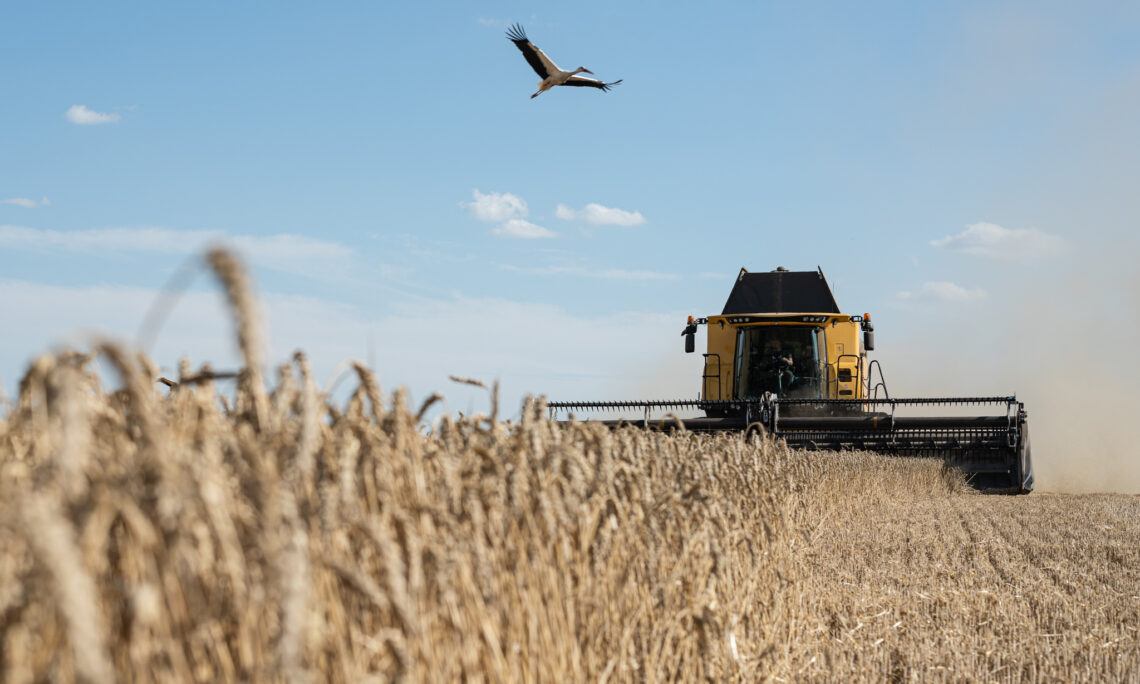
While urban and industrial plots are accessible, agricultural land remains strictly off-limits to foreign capital. Attempting to bypass this through ‘nominee’ structures or layered ownership is high-risk and can lead to transaction invalidation. For large-scale projects, we secure long-term land leases (up to 50 years) through transparent public auctions instead.
Note: Even in cases of inheritance, non-residents are legally required to sell or transfer agricultural land within one year of acquisition.
Due Diligence: The Foundation of High-ROI Investing
In our practice, we don’t rely on ‘buyer beware.’ We rely on deep preparation. Before capital is allocated, especially in development projects, our legal team analyzes:
- Land Designation: We verify that the permitted use aligns with your development objectives.
- Encumbrances: We scan for hidden arrests, historical disputes, or third-party restrictions.
- Construction Parameters: We verify the Town Planning Conditions and Restrictions (MUO) to ensure the project’s technical limits and urban-planning permissions protect the potential ROI.
Why Partner with Nadlane?
Capital alone isn’t enough in Ukraine; you need a partner who enforces a high standard of transparency.
As a boutique real estate investment firm, Nadlane specializes in high-yield Ukrainian assets for international clients. Our legal team is based on the ground in Kyiv, providing real-time oversight of every transaction. We move beyond simple brokerage to provide investment structuring. From asset selection and rigorous due diligence to final registration, we ensure our clients remain informed and in full control of their Ukrainian portfolio.
Need expert guidance on the Ukrainian market? Check out our full range of services here.
Contact our team at support@nadlane.com.
Yes. Foreign individuals and companies have the same rights as Ukrainians to own residential and commercial real estate. You do not need a local partner to hold the title; the property is registered 100% in your name.
The definitive proof is the digital record in the State Register of Real Rights. After you sign the agreement, the notary enters your name into this national database. You will receive an official extract from this register as your main ownership document.
Yes, foreigners can own land designated for construction, such as for offices, warehouses, or houses. However, agricultural land is strictly off-limits to foreign investors. For large agricultural projects, we help clients secure long-term leases for up to 50 years instead.


Secure Your Next
Investment Today
At Nadlane, we help investors unlock opportunities in real estate and land development. Our expertise covers market research, property acquisition, and long-term growth strategies, turning opportunities into lasting value.
Contact our team of investment specialists to explore exclusive opportunities
tailored to your goals.